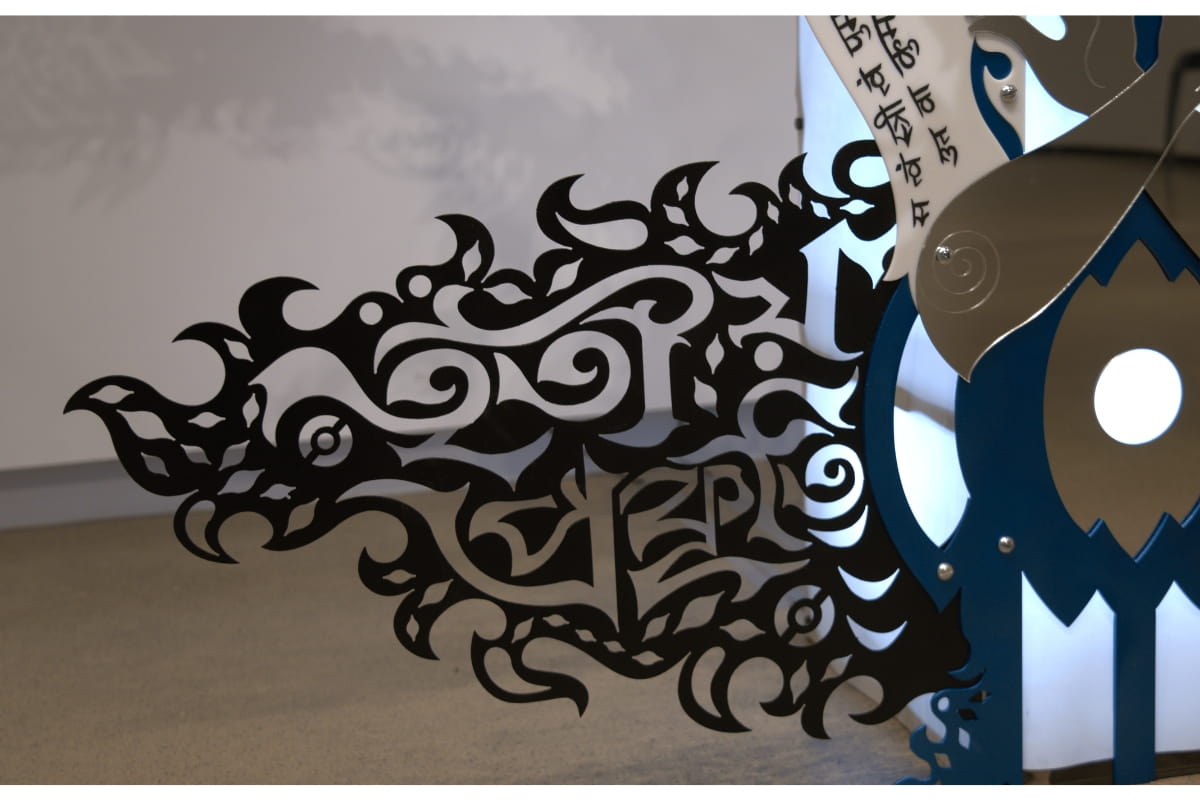
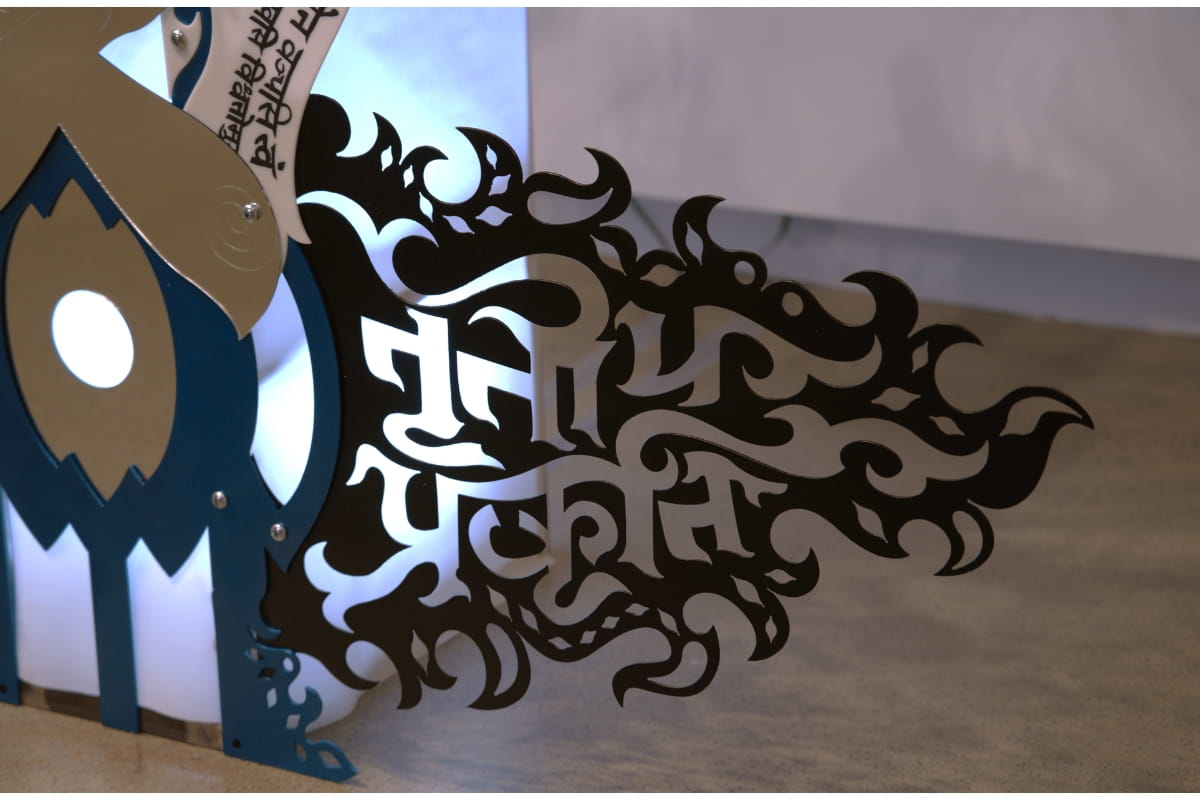
Tritiya Prakriti:
The Third Nature
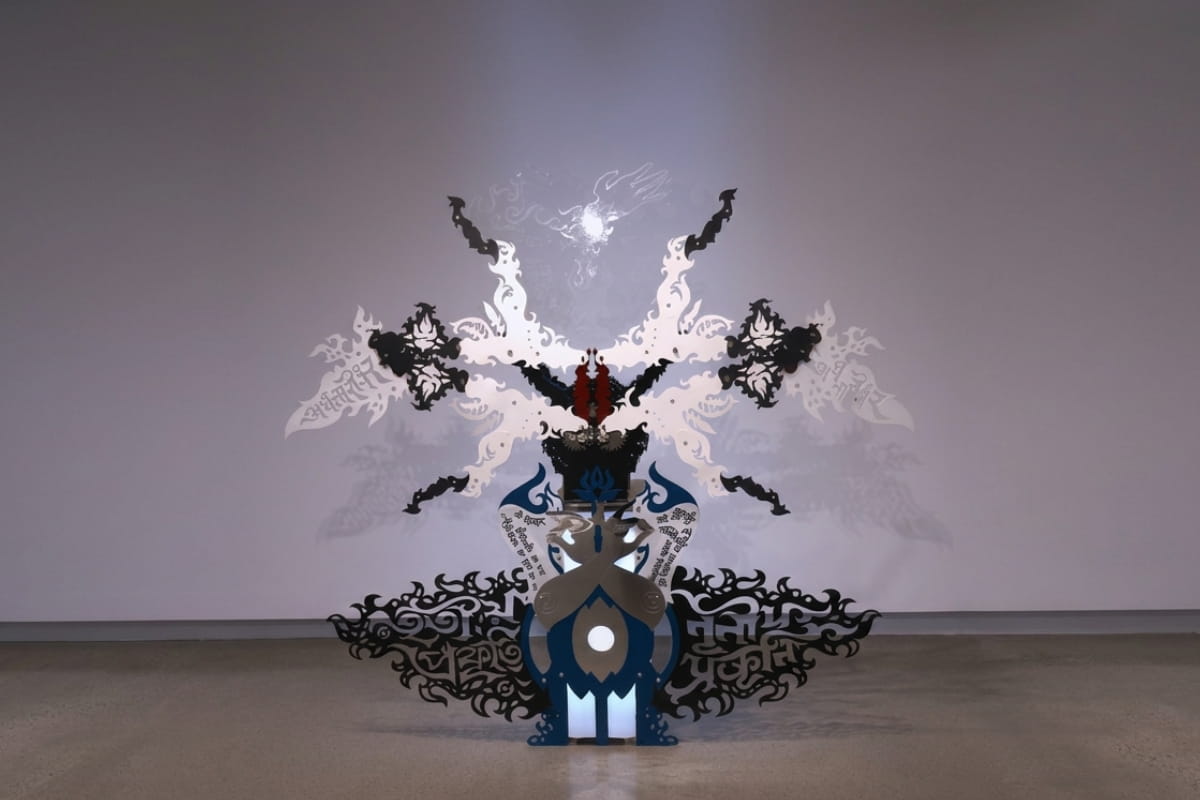
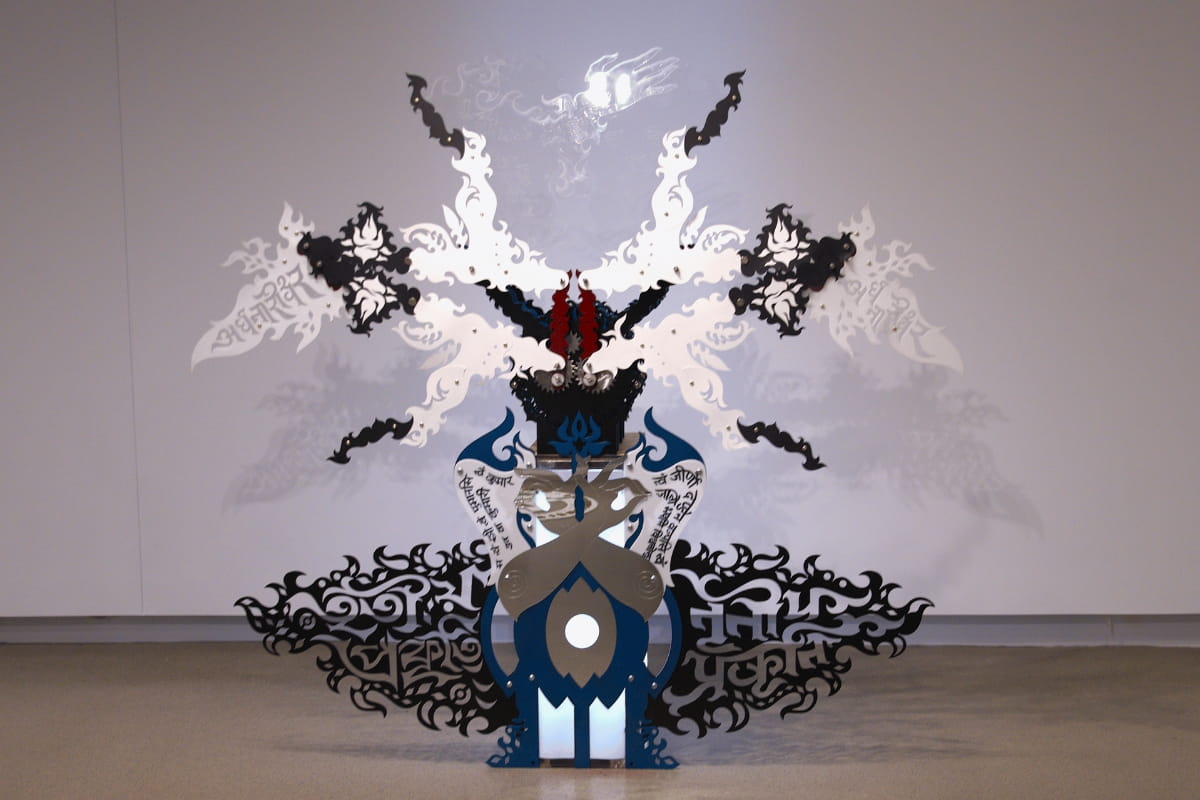
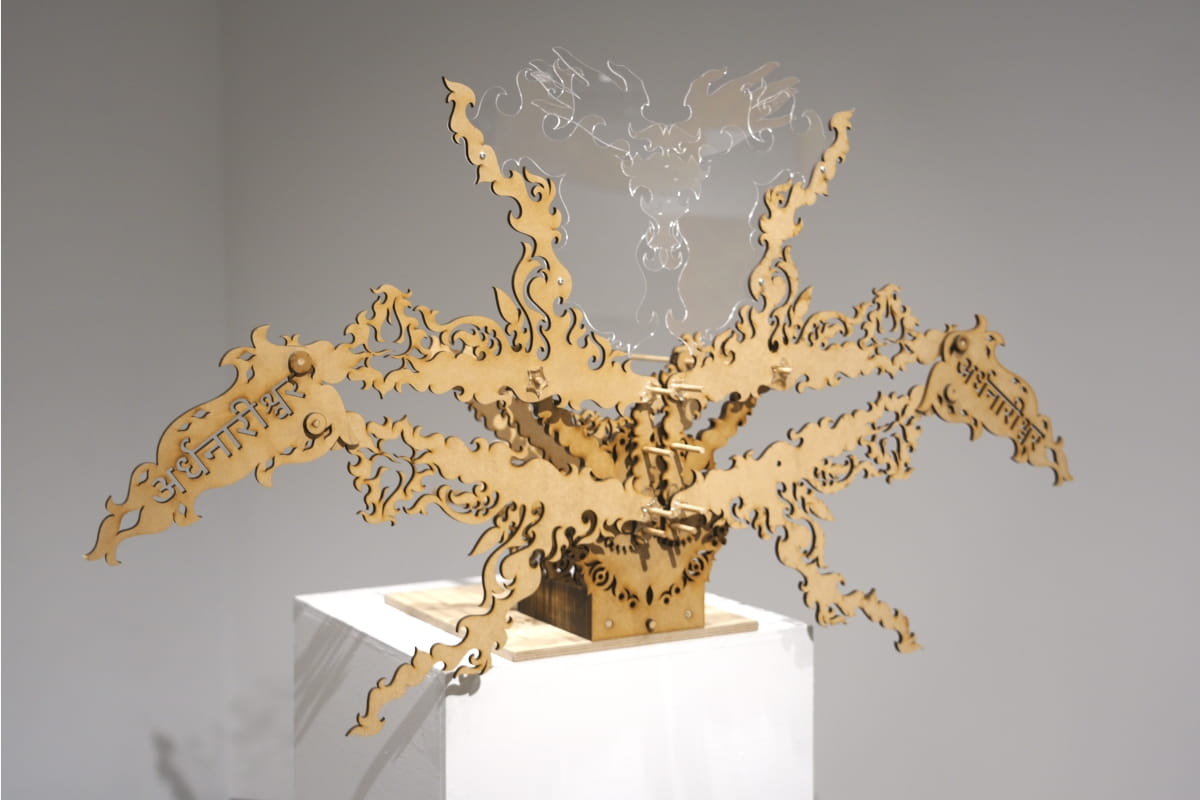
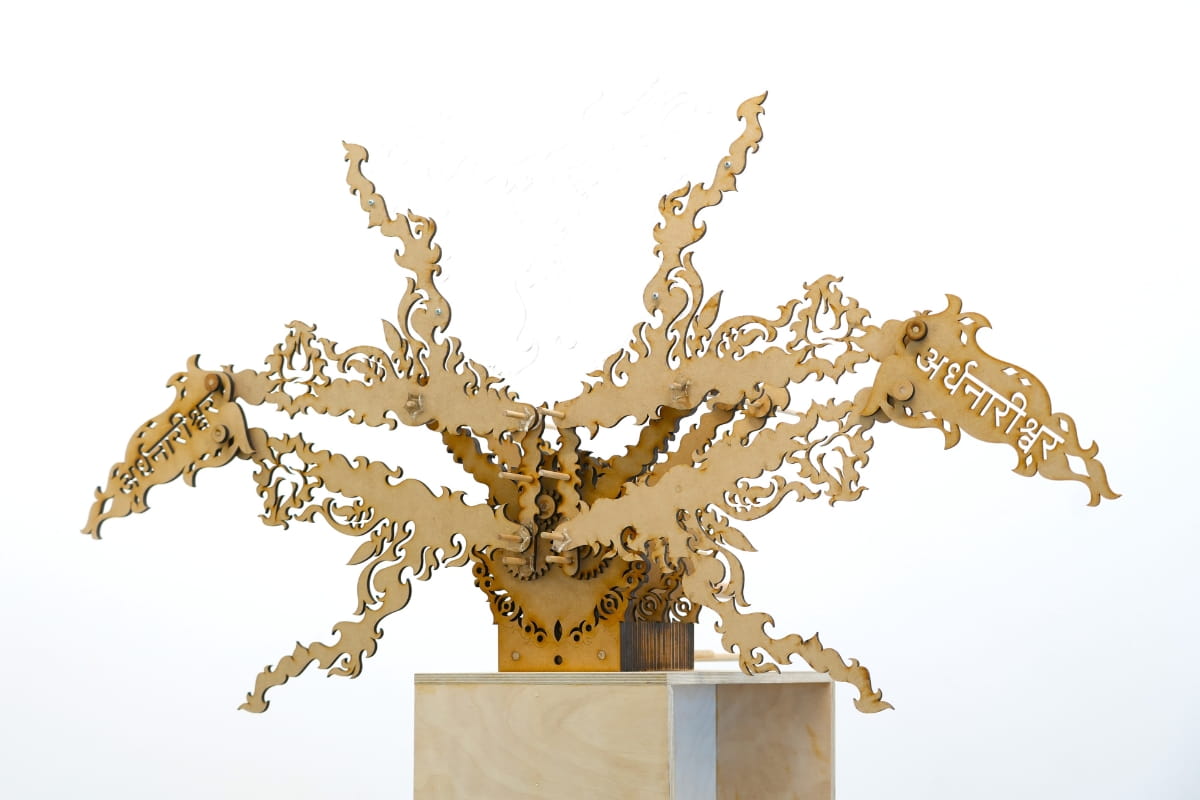
Medium: Metal, Wood, Dura-Lar, Acrylic, Motor and electronics circuit
Dimensions (approximate): 5ft (L) x 5.5ft (H) x 2.5ft (W)
Status: Evolving. Project started in February, 2025)
Abstract:
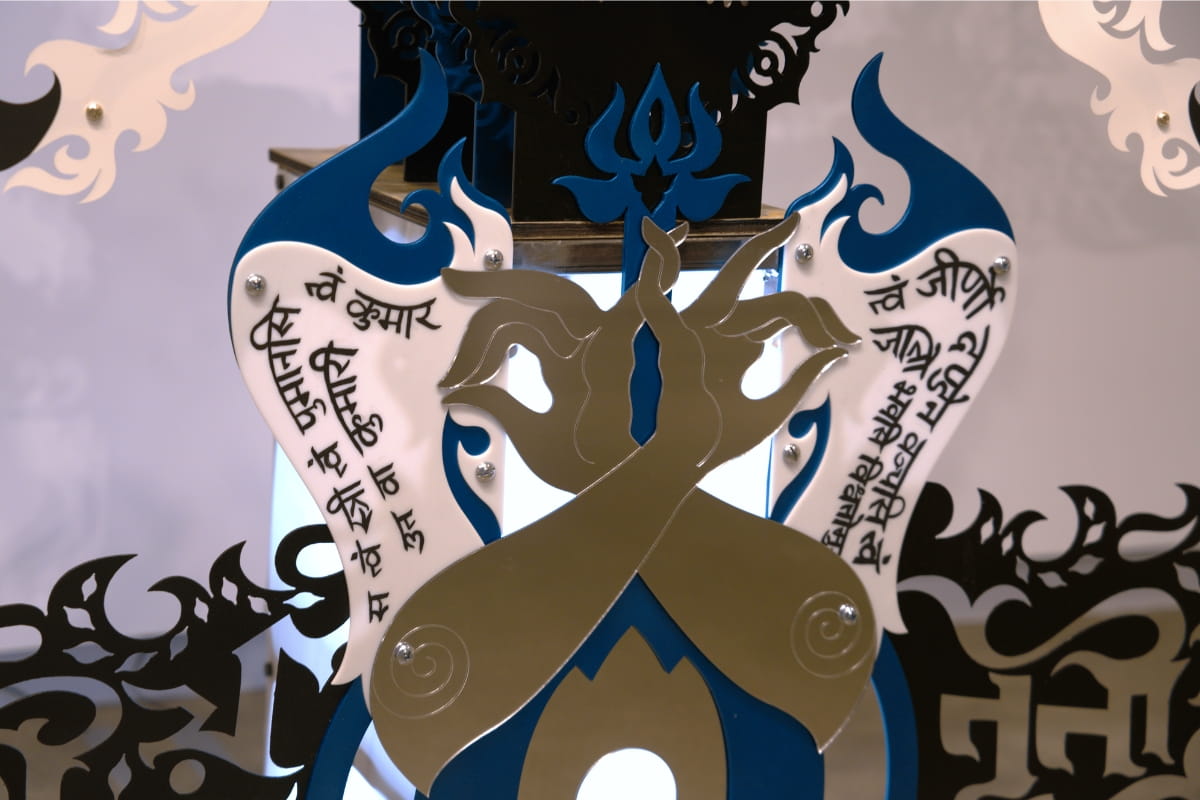
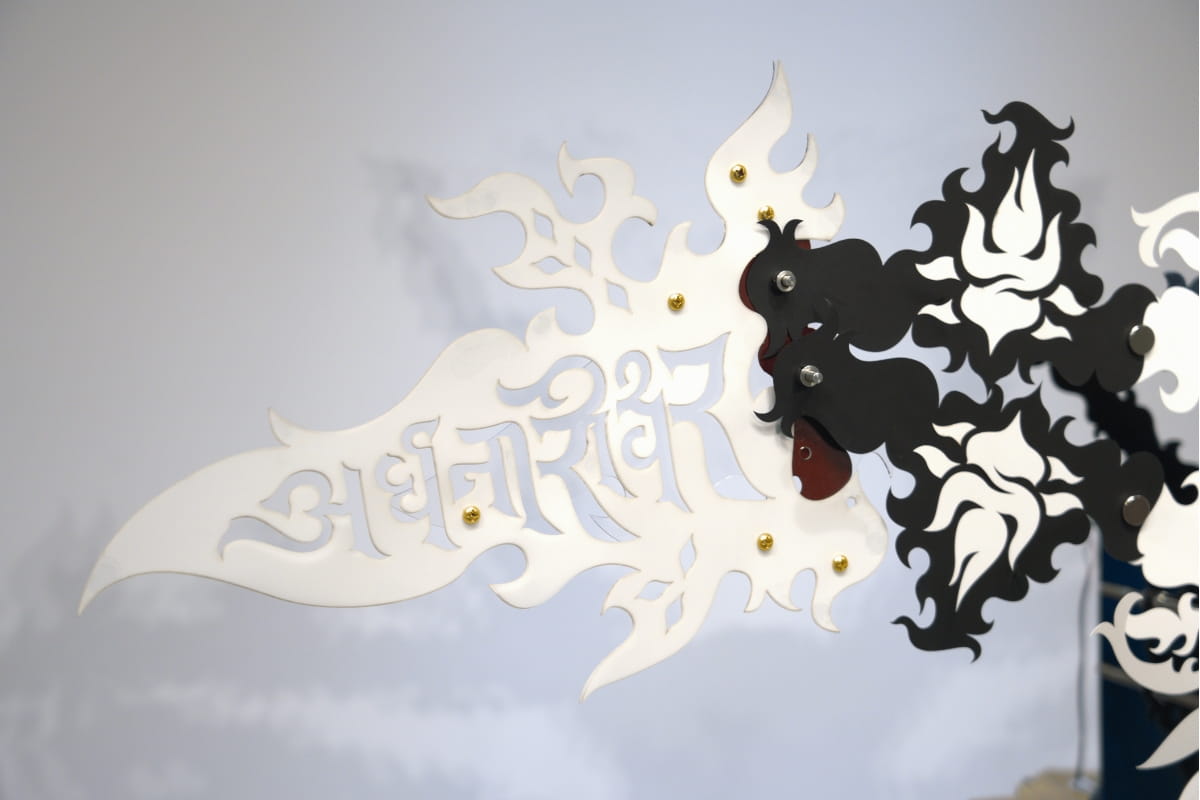
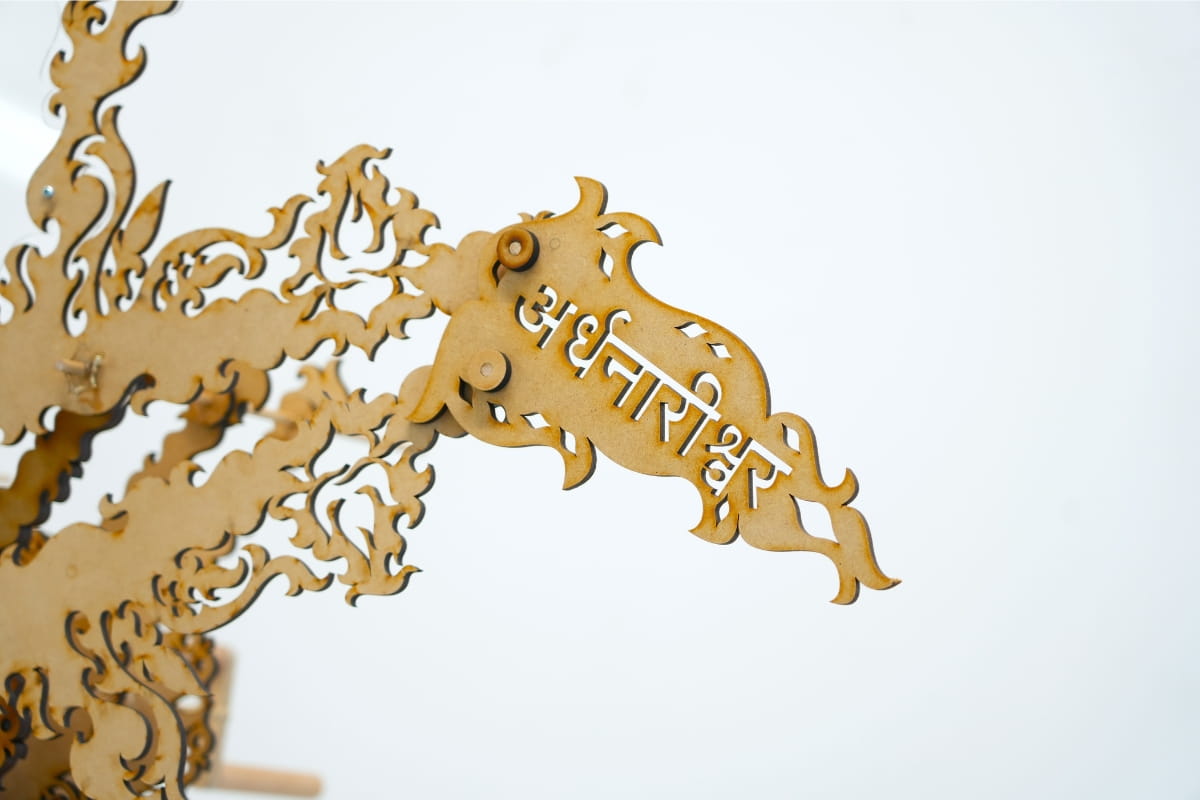
“Tritiya Prakriti – The Third Nature”, is a mechanical wing sculpture embedded with Sanskrit and Bengali texts and words which dates back up to 1600 to 4000 years that describes queerness in human and animal nature throughout ancient times in South Asian culture. One of the criticality of this kinetic piece lays in its political relation with the social gender norms and human rights movements that are in constant retaliation with the governmental laws.
LQBTQIA+ identities, relationships and representation were in a decent to moderate and considerable situation or state till the mid century in South Asia. However, it was never “constitutionally criminalised” before the British Colonisation of India or we can say before the British Raj. But, even after independence, that fundamental law of criminalising people’s gender identity became an embedded part of the constitutions of South Asian countries such as India. Pakistan, Bangladesh and the governments continued to keep it as criminal offence till now. In India, Penal Code 377 that directly comes from British East India Company Penal code that held this law of criminalisation of queer identities and relations was still in effect till 2018, until a massive uproar and long years of retaliation made the supreme court of India come to a decision to put down this code. However, legal rights like legal marriage, building family and combined healthcare system, adopting child or even donating blood is still not legalised in India. For Pakistan and Bangladesh, it’s still in way worse situation and a lot of activists are underground for safety issues. In India, small organisations and groups started forming since 60s-70s that slowly turned into larger movement which is now acting nationwide to build awareness programs of gender studies and history of gender rights movement.
A major part of my practice revolves around crisis and it’s “hybridity” or “hybridisation”. This piece, with its hybrid use of materials, engraved and embedded ancient texts, names of gender fluid ancient deities, verses (shlokas) and present day rules as symbols and a chimera like structure and movement, stands in a very poignant point of conversation that revokes the farce claim of South Asian governments that, “This is not in the culture” or “This is not how Indian or South Asian family system works”. In a country like India, where generational colonial trauma is tremendously effective in the construction of mass consciousness and mentality, the sole existence of this piece revokes conversation on mass manipulation, colonial atrocities and dehumanisation. A piece, that isn’t just made for a change but to remind us about the history of perseverance to just call human.
Showcase
SAIC Graduate Exhibition, 2026
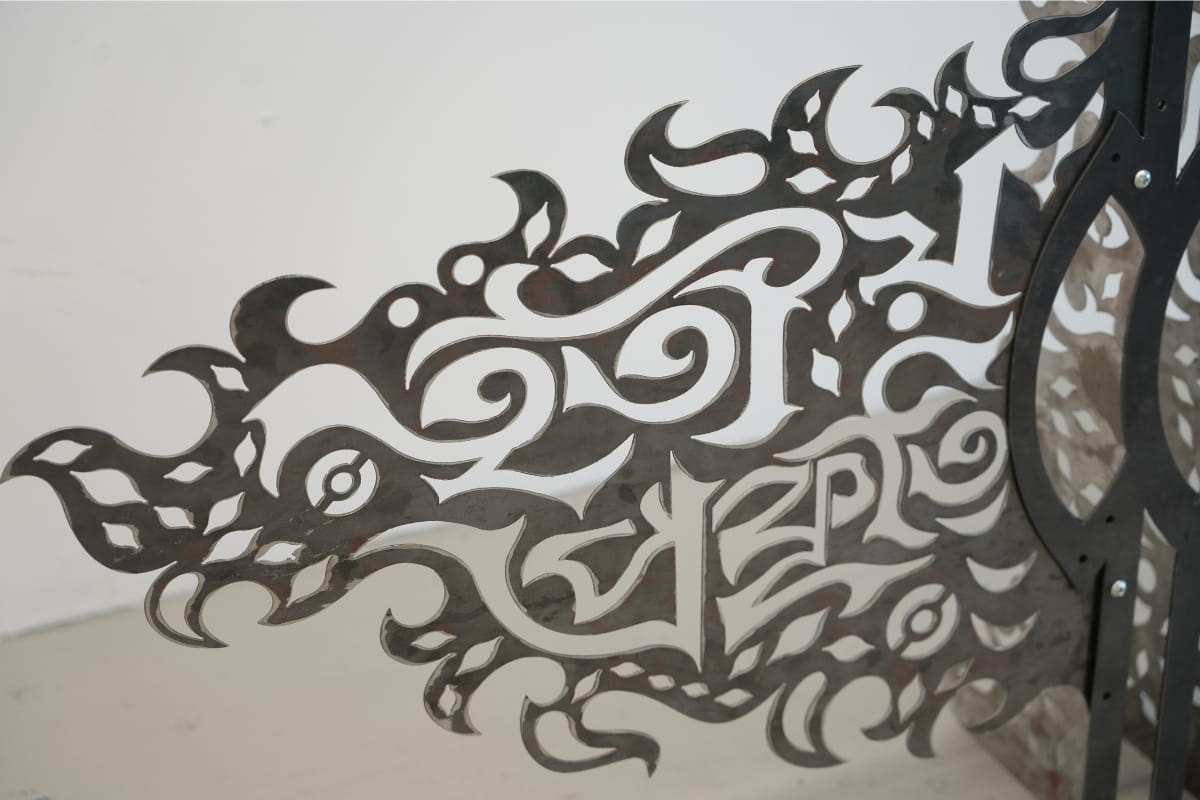
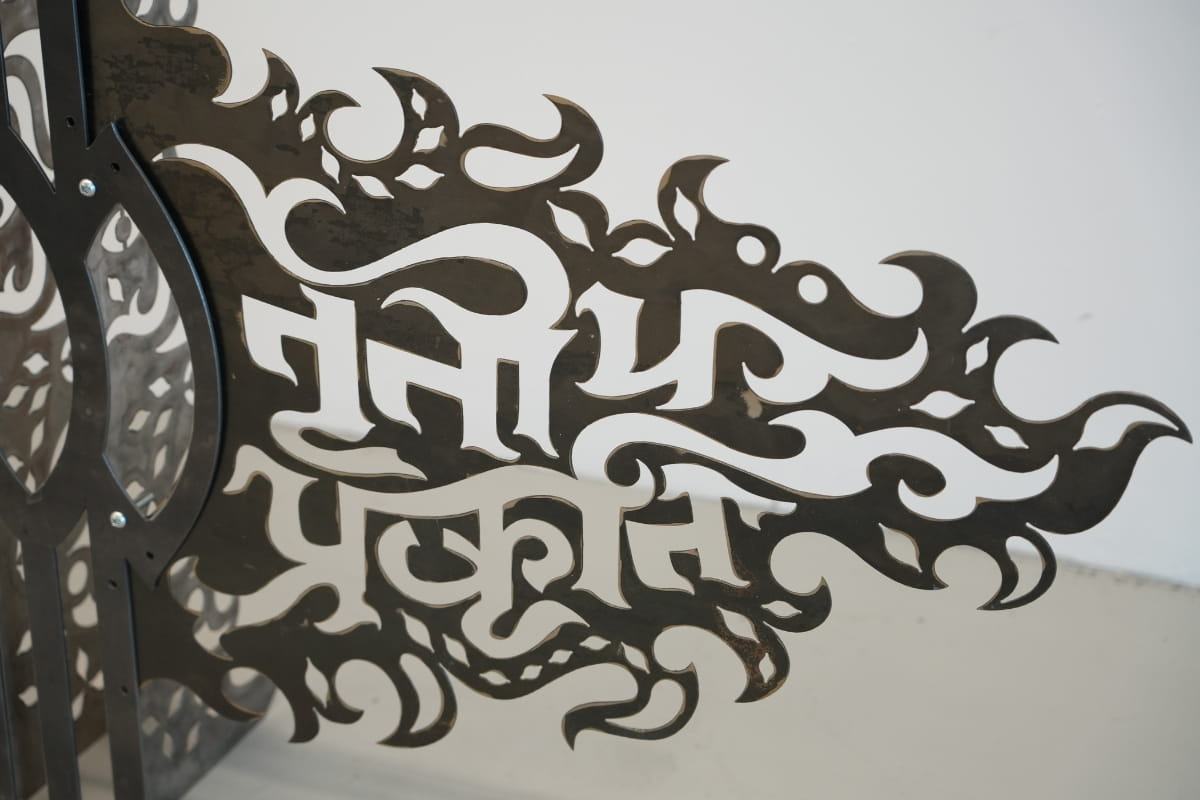
The Prototype
The Sculpture